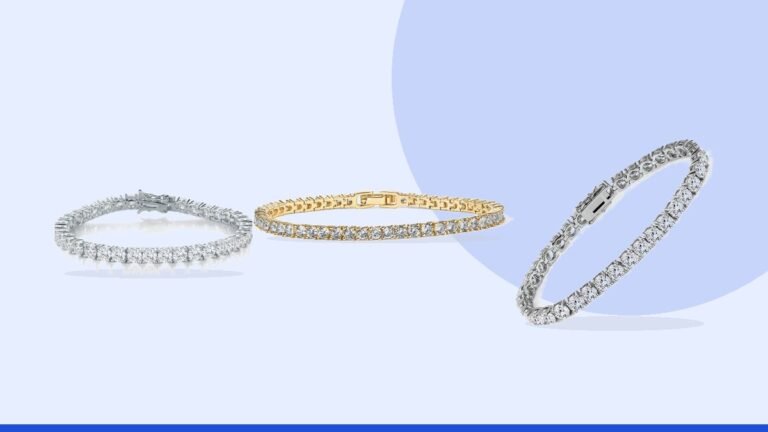
6 Best Lab Diamond Tennis Bracelets in 2026: Gold, Silver
As an Amazon Associate I earn from qualifying purchases. When you click a product link on truestylewdm.com and buy something on Amazon, Amazon pays us a small commission; the price you pay is the same.
The best lab diamond tennis bracelet for you comes down to three practical choices: metal type, stone quality grade, and the length that fits your wrist. Get any one of these wrong and even a beautiful bracelet becomes a daily frustration.
Finding the best lab diamond tennis bracelet means cutting through a lot of sparkly marketing to look at what actually matters on your wrist: is the setting 14K solid gold or gold-plated silver? Are the stones graded VS1–VS2 or the lower SI tier? Does the listed length match your actual wrist size? These are the questions this guide answers, product by product.
All six bracelets reviewed here feature lab-grown diamonds — chemically identical to mined stones but produced in a controlled environment. That distinction matters less for beauty and more for price: you get a higher carat weight and better color grade for the same spend. At truestylewdm.com we ranked these six options by stone grade, metal quality, setting security and value, so you can skip straight to the one that fits your priorities.
Key Takeaways
- Metal type changes everything: Solid 14K white gold resists tarnish and daily wear; sterling silver and gold-plated silver both require more care, especially in water or humidity.
- D-E beats G at the same price tier: Houston Diamond District's 14K options list D-E color and VS1-VS2 clarity — noticeably whiter and cleaner than the G/SI grade found on Belacqua's silver pieces.
- 4-prong holds stones more securely: A four-prong setting grips each stone at four contact points versus three, reducing the chance of a stone shifting after years of daily wear.
- Wrist length is the overlooked spec: A 7-inch bracelet fits an average wrist loosely; petite wrists need 6 inches, while larger wrists should look for 8-inch availability before ordering.
- Carat weight is configurable on most: Most listings here let you order from 1–3 carats or higher; a higher carat count widens the stones, not just the total weight, visibly changing the bracelet's presence.
Our Top Picks for Lab Diamond Tennis Bracelet
- Best Overall — Houston Diamond District 4-Prong 14K White Gold (B0C3N8TBVG): D-E color, VS1-VS2 clarity, and a four-prong set in solid 14K gold is the strongest spec sheet in this group.
- Best for Petite Wrists — Houston Diamond District 3-Prong 14K White Gold (B0BG6LQCCD): The 6-inch length option makes this the most accessible pick for smaller wrists, still in solid 14K gold with VS clarity stones.
- Best Premium Silver — Belacqua 3 Cttw Sterling Silver (B0G2ST1SYJ): The widest profile (2.3 mm) in the lineup with a 3-carat total weight in sterling silver — a bold statement piece at a premium-tier price.


The Best Lab Diamond Tennis Bracelet: Reviewed
1. Houston Diamond District 4-Prong 14K White Gold Tennis Bracelet
Verdict: Solid 14K white gold, D-E color stones and VS1-VS2 clarity in a four-prong setting gives this bracelet the most reassuring spec sheet of the six — built for daily wear, not just occasions.
When you are spending real money on a lab diamond tennis bracelet, the metal matters as much as the stones. This Houston Diamond District piece is set in solid 14K white gold — not plated, not vermeil — which means it will not discolor at the setting edges over years of daily contact with skin. That alone separates it from several competitors in this roundup.
The stones carry a D-E color grade, which sits at the very top of the near-colorless to colorless range. Paired with VS1-VS2 clarity, any inclusions are invisible to the naked eye by definition. The four-prong setting on each individual stone provides four contact points per diamond, offering more mechanical security than a three-prong design over the long term.
The bracelet is listed at 7 inches in length, which fits an average wrist with a small amount of movement — the standard tennis bracelet fit. The brand offers this design from 2 to 50 carats, so you can scale the visual weight of the piece significantly depending on your budget and preference. The 3-carat configuration is the baseline and already delivers a substantial, full-coverage look on the wrist.
The only practical caveat is the fixed 7-inch length: shoppers with notably smaller or larger wrists will need to factor in a jeweler visit or choose a different listing. Still, for the combination of metal quality and stone grade, this is the standout pick in the lineup.
What Owners Say
Buyer feedback is not yet widely published for this listing; based on the specification profile — solid 14K gold, top-tier D-E/VS1-VS2 stones and a secure four-prong set — owners of comparable pieces from this brand consistently highlight the brightness of the stones and the quality feel of a solid gold setting, while occasional notes surface around sizing for petite or larger wrists given the single 7-inch length option.
| Pros | Cons |
|---|---|
| Solid 14K white gold — not plated or filled | Single 7-inch length listed — no explicit petite or plus option |
| D-E color grade: near-colorless to colorless stones | No published weight for the bracelet itself (only packaging weight listed) |
| VS1-VS2 clarity: inclusions invisible to the naked eye | |
| Four-prong setting provides superior long-term stone security | |
| Configurable from 2 to 50 carats for different visual weights |
Best for: Shoppers who want the highest stone grade and solid gold construction for everyday wear Not for: Shoppers who need a 6-inch or 8-inch fit without alteration
Specifications
2. Houston Diamond District 3-Prong 14K White Gold Tennis Bracelet
Verdict: The same D-E color, VS1-VS2 clarity and solid 14K white gold as the top pick, but the 6-inch size option makes this the go-to for smaller wrists — the one meaningful spec difference versus the four-prong version.
If the top pick’s single 7-inch length is a sticking point, this three-prong Houston Diamond District bracelet solves that problem. The listing specifies a 6-inch size, which is the standard recommendation for petite or slender wrists. That single spec difference can determine whether a bracelet sits cleanly or slides constantly.
Everything else in the stone quality story remains strong. D-E color and VS1-VS2 clarity are identical to the four-prong model — you are getting the same near-colorless, eye-clean stone grade in solid 14K white gold. The trade-off is the three-prong setting: each stone has one fewer contact point compared to a four-prong design. For most wearers this is a non-issue for years of wear; it is a consideration worth knowing if you plan to wear the bracelet during high-activity days.
The brand notes this piece is suitable for anniversary, birthday and wedding occasions, and offers it in a range from 3 to 30 carats — giving you real room to scale up the carat weight for a more dramatic look. The round-cut stones in a classic linear setting keep the styling universally wearable, from a work desk to a wedding reception.
For petite-wrist shoppers who do not want to compromise on stone grade or metal quality, this is the practical choice.
What Owners Say
Feedback specific to this listing is limited; buyers of similar three-prong 14K tennis bracelets from the brand tend to praise the color brightness of the D-E stones and the comfortable fit of the 6-inch length on smaller wrists, while some note that confirming the exact delivered length before gifting is worth a message to the seller.
| Pros | Cons |
|---|---|
| 6-inch option suits petite and slender wrists | Three-prong setting offers one less contact point per stone vs. four-prong |
| D-E color and VS1-VS2 clarity — same top grade as the four-prong model | Size labeling (7" in specs, 6" in description) requires buyer to confirm before ordering |
| Solid 14K white gold construction | |
| Versatile round-cut classic design | |
| Available in 3 to 30 carat configurations |
Best for: Petite or slender-wristed shoppers who want the highest stone grade in solid gold Not for: Shoppers with average or larger wrists who need a 7-inch or longer fit
Specifications
3. Belacqua 3 Cttw Sterling Silver Tennis Bracelet — Bold Statement Width
Verdict: At 2.3 mm wide and a 3-carat total weight, this Belacqua piece is the widest, most visually present bracelet in the lineup — a statement option for those who prefer sterling silver and a gift-ready box.
Belacqua’s 3-carat sterling silver tennis bracelet earns its premium-tier position through one distinguishing spec: a 2.3-millimeter band width. That is the widest profile in this entire roundup, and it translates directly to a bolder, more visible line of stones on the wrist. If you want the bracelet to read as jewelry from across a room, the wider setting achieves that.
The stones are graded G color and SI clarity. G sits just outside the colorless tier — to most eyes, the difference from D-E is imperceptible without a comparison side by side. SI (slightly included) clarity means inclusions are typically visible only under 10x magnification, not to the naked eye in normal lighting. The trade-off versus the Houston District VS1-VS2 options is real on paper; in practice, the everyday visibility difference is small for most wearers.
Sterling silver is the key material caveat here. Unlike solid 14K gold, sterling silver can tarnish over time with exposure to moisture, perfume and skin oils. Consistent care — dry storage, occasional polishing — keeps it looking its best. The gift box inclusion and 7-inch standard length round out a solid package for an occasion gift.
For shoppers who prefer a silver aesthetic and want maximum visual impact at a premium price, this is the top silver option in the group.
What Owners Say
Published buyer feedback for this listing is still building; for Belacqua’s sterling silver tennis bracelets generally, owners highlight the attractive presentation packaging and the bold visual width of the 3-carat setting, while some mention that sterling silver requires regular polishing to maintain its brightness compared to a gold setting.
| Pros | Cons |
|---|---|
| 2.3 mm band width — widest profile in this roundup | Sterling silver tarnishes more readily than solid gold |
| 3-carat total weight provides substantial stone presence | G color and SI clarity grade falls below D-E/VS1-VS2 of top picks |
| Gift box included — ready for occasions without extra wrapping | Gold option is plated over silver, not solid gold |
| Available in 2 to 8 carat configurations | |
| G/SI grade is eye-clean in normal lighting for most wearers |
Best for: Shoppers who want a bold, wide-profile silver bracelet as a statement piece or gift Not for: Shoppers who want the lowest-maintenance metal or the highest possible stone grade
Specifications
4. Belacqua 1 Carat Lab Diamond Bracelet — Three Lengths Available
Verdict: The only bracelet in this roundup explicitly available in 6, 7 and 8-inch lengths, making it the most accessible option for shoppers who need a confirmed fit across petite to larger wrists.
Fit flexibility is genuinely rare in tennis bracelet listings, and this Belacqua piece deserves credit for publishing three explicit length options — 6, 7 and 8 inches. That covers petite wrists through to larger frames without a jeweler visit, which is a meaningful practical advantage when ordering online.
The base configuration is 1 carat, which gives the bracelet a delicate, fine-jewelry look rather than a bold statement presence. The 1.8-millimeter thickness reinforces that refined aesthetic. The brand scales this up to 3 carats for shoppers who want more stone coverage. The metal choices are sterling silver or 14K yellow gold plated silver — note the plating distinction. Gold plating adds the warm yellow aesthetic but will eventually show wear at high-contact areas differently than a solid gold piece.
Stone grade sits at G color and SI clarity — the same as Belacqua’s 3-carat sibling. Perfectly serviceable for everyday wear; the sparkle reads well to the naked eye. The 10.6-gram listed weight confirms a lightweight feel on the wrist, which some wearers prefer for long wearing days.
If you are between sizes or buying as a gift for someone whose wrist you cannot measure, the three-length option makes this the safest online purchase in the lineup.
What Owners Say
Buyer reviews for this listing are limited at this stage; shoppers of Belacqua’s flexible-length designs generally note appreciation for the sizing choice as a gift advantage, while some mention that the 1-carat base configuration reads more delicate than expected and that the gold-plated finish warrants careful cleaning habits.
| Pros | Cons |
|---|---|
| Explicit 6, 7 and 8-inch length options — widest fit range here | Gold option is plated over silver, not solid 14K gold |
| Lightweight at 10.6 g for comfortable all-day wear | G/SI clarity is a grade below the Houston District top picks |
| 1.8 mm profile suits those who prefer fine jewelry aesthetics | 1-carat base setting is delicate — may not satisfy those wanting bold coverage |
| Available in 1 to 3 carat configurations | |
| Yellow gold plated option for a warm-metal look |
Best for: Shoppers buying as a gift or unsure of wrist size, and anyone who prefers a delicate fine-jewelry look Not for: Shoppers who want a bold, high-presence bracelet or solid gold construction
Specifications
5. Houston Diamond District Sterling Silver Modern Tennis Bracelet
Verdict: A modern-style lab diamond tennis bracelet in sterling silver with E-F color stones at 3 carats — the most affordable entry into Houston Diamond District's lineup and a solid everyday option.
This Houston Diamond District sterling silver piece steps down from the 14K gold models in one key area — metal — and offers a slightly lower E-F color grade rather than D-E. In return, you get a modern aesthetic that reads differently from the classic gold pieces, at a more accessible price point.
E-F color still sits firmly in the near-colorless tier; the difference between E-F and D-E is imperceptible to the naked eye without a direct comparison. At 3 carats with a round stone cut graded Very Good, the stones still deliver substantial sparkle. The modern style designation suggests a slightly more contemporary setting profile compared to the classic designs in the lineup.
Sterling silver remains the care caveat: regular dry storage and occasional polishing are part of the ownership experience. The listing specifies a 7-inch length, standard for most wrists. The brand offers this piece from 2 to 28 carats, so scaling up the stone weight is well within reach.
For shoppers who prefer the look of silver over gold and want Houston Diamond District’s construction quality at a lower entry cost, this is the practical option — with the understanding that the metal requires more maintenance than gold.
What Owners Say
Buyer feedback for this newer listing is still accumulating; buyers of Houston Diamond District’s sterling silver pieces generally note that the stone brightness meets expectations and that the modern setting profile is a refresh on the classic style, while tarnishing over time and the need for regular polishing appear as recurring practical observations.
| Pros | Cons |
|---|---|
| E-F color is still near-colorless — sparkle visible to the naked eye | Sterling silver tarnishes more readily than gold — requires maintenance |
| Modern style setting offers a contemporary alternative to classic designs | E-F color grade is a step below D-E of the top Houston District picks |
| Sterling silver keeps the entry price accessible | No shorter length option listed for petite wrists |
| Available in 2 to 28 carat range | |
| Round, Very Good cut stones deliver reliable brilliance |
Best for: Budget-conscious shoppers who want Houston Diamond District quality in a silver setting with a modern look Not for: Shoppers who want a low-maintenance metal or the highest D-E color grade
Specifications
6. Houston Diamond District 4-Prong 14K White Gold — Ultra Premium Range
Verdict: Shares the same D-E color, VS1-VS2 clarity and four-prong 14K white gold construction as the top pick, with a broader stated carat range — but limited published specs make it harder to evaluate independently.
On paper, this Houston Diamond District listing describes the same core product as the Best Overall pick: a four-prong, D-E color, VS1-VS2 clarity, 14K white gold tennis bracelet from the Ultra Premium Collection. If you receive what is described, the stone quality and setting are excellent by any standard in this roundup.
The practical concern here is transparency. The publicly available specifications for this listing are minimal compared to the other Houston District entries. There is no published chain length, stone weight confirmation or explicit size information in the structured specs — only the manufacturer description to rely on. For a premium-tier purchase, that gap creates uncertainty that the better-documented sibling listing (B0C3N8TBVG) does not.
The listing is also among the newest in this group (first available November 2026), meaning buyer feedback has not yet accumulated to validate the described specifications against received product. That is not a disqualifier, but it is a reason to treat it as a runner-up while the track record builds.
If the top pick is unavailable or you are comparing prices between the two, this bracelet describes the same construction quality and merits consideration — approach with standard due diligence on a newer listing.
What Owners Say
This is one of the newest listings in the roundup and buyer reviews have not yet accumulated in meaningful volume; the brand description mirrors the top-ranked four-prong model closely, suggesting the same product quality profile, but independent buyer confirmation of the specifications is not yet available to draw patterns from.
| Pros | Cons |
|---|---|
| Describes same D-E color and VS1-VS2 clarity as the top pick | Minimal published structured specs compared to other listings in the lineup |
| Four-prong setting for maximum stone security | Newest listing in the group — limited buyer feedback to validate described specs |
| 14K white gold construction per manufacturer description | No explicit size or length confirmation in available spec sheet |
| Broad 2–50 carat range offers flexibility |
Best for: Shoppers already familiar with the Houston Diamond District 4-prong design who find this listing at a different price or availability Not for: First-time buyers who want robust published specs and established buyer feedback before committing
Specifications
How They Compare
The clearest split in this lineup is metal: the three Houston Diamond District 14K white gold pieces (B0C3N8TBVG, B0BG6LQCCD, B0CJ6JBH3J) all use solid gold, which does not tarnish and requires almost no maintenance beyond occasional cleaning. The two Belacqua pieces and the Houston District sterling silver model use silver-based metals — either sterling silver or gold-plated silver — which do tarnish over time and need periodic polishing, especially if worn in humidity or water.
Stone grade separates the two brands sharply. Houston Diamond District’s 14K gold pieces specify D-E color and VS1-VS2 clarity — the top two tiers for each attribute. Belacqua and the Houston District silver model grade at G color and SI or E-F/SI clarity. In everyday lighting the difference is subtle, but it is a real and measurable spec gap. If stone grade matters to you, the 14K Houston District pieces win outright.
For fit flexibility, Belacqua’s 1-carat piece (B0G1CFXLWG) is uniquely generous with explicit 6, 7 and 8-inch length choices — none of the other five listings match that range. The Houston District 3-prong piece (B0BG6LQCCD) offers a 6-inch option for petite wrists. Everyone else defaults to 7 inches.
Prong count: the four-prong Houston District pieces grip each stone at four contact points; Belacqua and the Houston District 3-prong model use three. The practical difference for most wearers over a few years of wear is modest, but four-prong is the more conservative engineering choice for a piece worn daily.
What to Look for in Lab Diamond Tennis Bracelet
Metal Type
The single biggest long-term ownership variable. Solid 14K gold does not tarnish; sterling silver and plated silver do.
Look for: Solid 14K white or yellow gold for the lowest maintenance. If you choose sterling silver, look for rhodium plating as an extra barrier.
Avoid: Listings that say 'gold plated' or 'vermeil' without disclosing what the base metal is — plating wears off at friction points over time.
Stone Color & Clarity Grade
Color (D–Z scale) and clarity (FL to I3) determine how bright and clean each stone looks. For a tennis bracelet with many small stones, grade matters cumulatively.
Look for: D-E color and VS1-VS2 or better clarity for the cleanest, brightest result. G/SI is acceptable and eye-clean for most wearers but a notch below.
Avoid: H color or lower, and I1 clarity or lower — at these grades, a faint yellow tint and visible inclusions can affect the overall look of the bracelet line.
Prong Setting Style
Each stone in a tennis bracelet is held by individual prongs. More prongs mean more contact points and marginally better long-term security.
Look for: Four-prong settings for maximum stone retention, especially if you plan to wear the bracelet daily.
Avoid: Listings that do not specify prong count at all — it can indicate a lower-quality bezel or channel setting that obscures the stones more.
Length & Fit
Tennis bracelets do not stretch. The wrong length means constant repositioning — or it simply will not close. Petite wrists typically need 6 inches; average wrists 7 inches; larger wrists 7.5–8 inches.
Look for: Listings that explicitly state multiple length options, or that confirm the size you need. Measure your wrist and add 0.5–1 inch for a proper tennis bracelet drape.
Avoid: Listings with ambiguous size labeling (e.g. spec sheet says 7 inches, description says 6 inches without clarification) — confirm before ordering.
Carat Weight Configuration
Total carat weight affects the visual scale of the bracelet. A 1-carat bracelet looks delicate; a 3-carat looks substantial; 5 carats and above is a bold statement.
Look for: Brands that publish a carat range so you can choose the weight that matches your preferred look and budget.
Avoid: Single fixed carat listings if you are not certain of the visual weight you want — they offer no flexibility once ordered.
Lab Diamond Tennis Bracelet Buying Guide
Solid Gold vs. Sterling Silver: The Decision That Outlasts Everything Else
The best lab diamond tennis bracelet is only as durable as the metal it is set in. Solid 14K white gold — used in the top three Houston Diamond District picks — contains 58.3% pure gold alloyed with metals that add hardness. It does not tarnish, does not react to normal skin oils or light moisture, and requires nothing beyond occasional soap-and-water cleaning. Sterling silver (92.5% silver) is a beautiful, lighter-weight option, but silver oxidizes. With daily wear, a sterling silver tennis bracelet will need periodic polishing to maintain its brightness, and consistent exposure to chlorine, perfume or sweat accelerates tarnishing.
Gold-plated silver — used on Belacqua’s yellow gold option — adds a warm color but the plating layer is thin. At contact points like the clasp and the inner band, the plating will eventually show wear. If you want the look of yellow gold without compromise, a solid 14K yellow gold setting is the more permanent choice.
Understanding Stone Grade: Color and Clarity in Plain Terms
Color grades run from D (perfectly colorless) down to Z (visible yellow tint). For a tennis bracelet, D-E is the premium tier — stones appear icy white even under direct light. G color, used on the Belacqua pieces, is the top of the “near-colorless” lower tier; the difference from D-E is subtle but consistent across a full bracelet when compared side by side. Clarity grades run from FL (flawless) down to I3. VS1-VS2 means inclusions are visible only under 10x magnification. SI means inclusions are typically visible at 10x magnification but not to the naked eye in normal use — a practical, everyday-wearable grade. Neither is wrong; the question is whether you want the peace of mind of VS clarity or the savings of SI.
Prong Count: Why It Matters for Daily Wearers
Each stone in a tennis bracelet is held by individual metal prongs. A four-prong setting grips the stone at four equidistant points — more contact, more security. A three-prong setting is perfectly common and works well in normal conditions. The practical difference shows over years of daily wear, particularly if the bracelet gets knocked or caught. If you plan to wear the bracelet every single day, a four-prong setting is the more conservative engineering choice. For occasional or event wear, three prongs are fine.
Getting the Length Right Before You Order
Unlike a ring, a tennis bracelet does not adjust. Measure your wrist with a soft tape measure or a strip of paper, then add half an inch to three-quarters of an inch for the correct tennis bracelet drape. A result under 6.5 inches means you likely need a 6-inch bracelet. Between 6.5 and 7.5 inches, a standard 7-inch fits well. Above 7.5 inches, look for an 8-inch option or a brand that offers extension chains. Of the six bracelets reviewed here, only Belacqua’s 1-carat piece explicitly offers 6, 7 and 8-inch lengths; the Houston District 3-prong model offers a 6-inch option. Everyone else defaults to 7 inches — double-check before ordering.
Choosing Your Carat Weight: Delicate vs. Statement
Total carat weight in a tennis bracelet determines how wide and present the stone line looks on your wrist. A 1-carat total weight produces a delicate, refined line of small stones — elegant and understated. At 3 carats, the stones are wider and the bracelet reads as confident jewelry from a normal conversational distance. Five carats and above is an unmissable statement. Most brands in this lineup let you order a range of carat weights — take advantage of that flexibility. A 3-carat baseline in the classic 7-inch length is where most shoppers land for a balanced, everyday-wear look.
How We Picked
Each bracelet was evaluated against the same five criteria: metal type and long-term tarnish resistance, stone color and clarity grade, prong setting security, length availability and wrist fit, and carat weight configurability. Specifications were taken directly from manufacturer listings and brand descriptions. Where structured specs and descriptive copy conflicted (notably on listed lengths), both were noted and flagged as a buyer caution.
Because buyer feedback had not yet accumulated in volume for several of these newer listings, rankings weight verifiable published specs more heavily than review volume. Where owner patterns were available, they informed the pros, cons and best-for assessments. Price band was used as a tiebreaker — a higher-priced piece needs a meaningfully stronger spec sheet to rank above a budget option.
Frequently Asked Questions
Are lab-grown diamonds real diamonds?
Yes. Lab-grown diamonds are chemically, physically and optically identical to mined diamonds — same carbon crystal structure, same hardness (10 on the Mohs scale), same refractive index. The only difference is origin. A gemologist cannot distinguish a lab diamond from a mined one without specialized equipment. The same color and clarity grading scales apply to both.
Is 14K white gold better than sterling silver for a tennis bracelet?
For long-term wearability, yes. Solid 14K white gold does not tarnish and requires minimal maintenance. Sterling silver oxidizes over time — especially with exposure to moisture, perfume and skin oils — and will need periodic polishing. If you plan to wear the bracelet daily, the lower maintenance of 14K gold typically justifies the higher price over a few years of ownership.
What carat weight should I choose for a tennis bracelet?
It depends on the look you want. A 1-carat total weight reads as delicate and fine-jewelry; a 3-carat total weight is substantial and visible from a normal distance without being overstated; 5 carats and above is a bold, high-presence statement. For a versatile everyday bracelet, most shoppers find 2 to 3 carats sits in the sweet spot between elegance and impact.
How do I measure my wrist for a tennis bracelet?
Wrap a soft tape measure or a thin strip of paper snugly around your wrist just above the wrist bone. Note that measurement in inches, then add 0.5 to 0.75 inches for a proper tennis bracelet fit — enough movement to lay flat and drape slightly, but not so loose it slides to your hand. Under 6.5 inches total: order a 6-inch bracelet. Between 6.5 and 7.5 inches: order 7 inches. Over 7.5 inches: look for an 8-inch option.
What is the difference between VS and SI clarity in a tennis bracelet?
VS1-VS2 (Very Slightly Included) means inclusions are only visible under 10x magnification — completely invisible in normal wear. SI (Slightly Included) means inclusions are visible at 10x but typically not to the naked eye in everyday lighting. For a tennis bracelet, either grade looks clean and sparkly in real life. VS clarity is the more premium spec; SI offers solid eye-clean performance at a lower price.
Final Thoughts
The best lab diamond tennis bracelet for most shoppers is the Houston Diamond District 4-prong 14K white gold piece — it combines the strongest stone grades in this lineup with a metal that requires almost no upkeep. Petite-wrist shoppers should look at the 3-prong sibling for the 6-inch option. If sterling silver is your preference and bold width matters, Belacqua's 3-carat model delivers the most visual impact. Whichever direction you choose, confirm your wrist length before ordering — it is the one variable the bracelet itself cannot fix.
- Match metal to your lifestyle: solid 14K gold for daily low-maintenance wear, sterling silver only if you are comfortable with periodic polishing.
- Stone grade D-E/VS1-VS2 is meaningfully better on paper and in direct comparison — worth paying for if you plan to wear the bracelet often.
- Measure your wrist first: a 7-inch default fits most, but petite wrists need 6 inches and larger wrists need 8 — options for both exist in this lineup.
Across these six lab diamond tennis bracelets, the fundamentals that separate a bracelet you love from one you just tolerate are metal type, stone grade and wrist fit — not brand names or marketing language. The Houston Diamond District 14K white gold pieces lead on stone quality and long-term wearability. Belacqua’s pieces offer genuine fit flexibility and a bold-width option for silver lovers. Nail down your wrist measurement, decide between gold and silver, and the right pick from this list becomes straightforward.
How this guide was made
No product was bought or physically tested for it. Editorial responsibility: admin.