How to Choose a Winter Coat in 2026: Long or Cropped
As an Amazon Associate I earn from qualifying purchases. When you click a product link on truestylewdm.com and buy something on Amazon, Amazon pays us a small commission; the price you pay is the same. Read our affiliate disclosure.
The coat you reach for every morning deserves more than a hasty size-chart guess.
You notice it the moment the temperature drops: last year’s coat gaps at the collar, the zip snags, the fill has migrated to one shoulder. Knowing how to choose a winter coat before you add it to your cart means matching length and fit type to how you actually dress — not how you plan to dress. This guide lays out what the label tells you and what it does not, then points you to the two women’s picks that best illustrate the choice.
Our top picks for How To Choose A Winter Coat
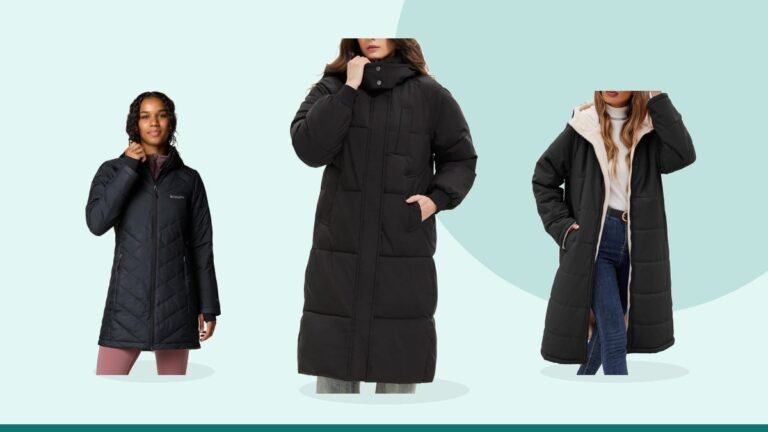
The PUFFIT long puffer leads because its waterproof rating and fitted long silhouette cover more of the body in wet, cold weather. At 5.6 oz the Gihuo is notably light; the PUFFIT's weight is not stated in its listing, so a direct comparison cannot be made.


Which one fits you
- Full coverage in rain and wind Waterproof, windproof, insulated long silhouette PUFFIT long puffer
- Layering over bulky knitwear Loose fit, cropped quilted cut
- Four pockets for daily carry 4 slant zip pockets listed Neither listing states lining details.
- Fitted look for city wear Fitted fit type, band collar PUFFIT long puffer
- Budget-conscious winter outerwear Lower-priced in this set The Gihuo listing does not state a water-resistance level.
Our How To Choose A Winter Coat picks
PUFFIT long puffer — fitted coverage for cold, wet days
 1 · Best Overall
Verdict: A fitted long quilted coat with a waterproof rating and polyester lining, suited to wet commutes and cold urban winters.
- Waterproof (Water Resistance Level) Windproof (from product description)
- 100% Polyester Fabric Type
- Fitted Fit Type
- Polyester Lining Description
Best for Women who commute in wet, cold weather and want a fitted, full-length coat.
Skip it if You layer thick sweaters under your coat — the fitted cut is restrictive; size up or choose the Gihuo's loose silhouette instead.
What we like
- Waterproof water-resistance level — strongest of the two women's picks
- Long quilted silhouette for more coverage than the cropped Gihuo
- Available from X-Small to XX-Large in multiple colourways
What could be better
- Only 2 pockets versus 4 on the Gihuo
- Item weight not stated in the listing
- Higher-priced in this set
Against the next pick: The PUFFIT is waterproof where the Gihuo lists no water-resistance level, and its long cut covers more of the leg; the Gihuo counters with a loose fit better for layering, twice as many pockets, and a listed weight of just 5.6 oz. The PUFFIT carries a waterproof water-resistance level; the Gihuo listing states no water-resistance level. The Gihuo's loose fit suits layering, it has twice as many pockets, and weighs a listed 5.6 oz.
Not stated on the listing: occasion, item weight. Also sold as: Small / Burgundy, XX-Large / Black, X-Small / Burgundy, X-Large / Elegant Charcoal.
Fabric
The shell is 100% polyester with a waterproof water-resistance level — the strongest protection rating in this pair. That means rain and sleet bead off rather than soaking through, which matters on a commute more than on a trail. The polyester lining adds a layer between you and the shell, something the Gihuo cropped puffer does not offer at all.
Fit
The listing calls this a fitted silhouette with a band collar and zipper closure. If you typically find fitted cuts snug across the shoulders or hips, the brand’s size run from X-Small to XX-Large (also in Burgundy, Admiral Blue and Elegant Charcoal) gives room to size up. The long, quilted line sits closer to the body than the Gihuo’s loose cut, so it reads more polished under a bag strap.
Care
The listing does not state care instructions, so check the physical label before washing. Polyester shells of this type usually tolerate a gentle machine cycle, but the quilted construction can shift fill if handled roughly — a mesh laundry bag reduces that risk.
Who it suits
Shoppers who need full-length coverage, want a waterproof outer layer without switching to a technical shell, and prefer a coat that fits close rather than over chunky knits. The higher price in this set is the clearest trade-off; the Gihuo costs less and carries four pockets to this coat’s two.
Skip it if
You layer heavily — the fitted cut leaves little room for thick sweaters underneath. The Gihuo’s loose silhouette handles that better.
Full listing specifications
| Color | Black |
|---|---|
| Style | Fashion Classics |
| Sleeve Type | Long Sleeve |
| Coat Silhouette Type | Quilted |
| Seasons | Winter |
| Pattern | Solid |
| Fit Type | Fitted |
| Collar Style | Band |
| Climate Suitability | Cold Weather |
| Closure Type | Zipper |
Gihuo cropped puffer — a light, loose jacket for layering
 2 · Best for Layering
Verdict: A loose, cropped quilted jacket at 5.6 oz with four zip pockets, suited to layering over knitwear at a lower price.
- insulated, windproof Coat Weather Protection
- Material: Polyester Fabric Type
- Loose Fit Type
- Unlined Lining Description
Best for Women who layer for warmth and want a lightweight, pocketed jacket for dry cold.
Skip it if Your winters are wet or you need a coat to work without layers underneath — the PUFFIT's waterproof long cut is the better choice.
What we like
- Lightest pick at 5.6 oz — easy to carry or layer under a longer outer shell
- 4 slant zip pockets versus 2 on the PUFFIT
- Loose fit accommodates thick knitwear underneath
- Lower-priced in this set
What could be better
- Not water resistant — unsuitable in rain or sleet
- Unlined, so warmth relies on layering rather than the coat itself
- Cropped length leaves the thigh exposed in deep cold
Against the next pick: Compared with the PUFFIT above it in this ranking, the Gihuo's 5.6 oz weight and loose cut make it easier to layer, but it offers no water resistance where the PUFFIT is fully waterproof.
Also sold as: XX-Large / Black, Medium / Green, Medium / Wine, XX-Large / Beige Color.
Who it suits
Shoppers who build warmth through layers rather than relying on the coat alone, and who want freedom of movement in a cropped, boxy cut. The loose fit type means there is real room for a chunky sweater or hoodie underneath, which the PUFFIT’s fitted silhouette does not offer. Available from Small to XX-Large in six colourways including Wine and Khaki.
Fabric
The listing does not state a fabric type or lining; it does not describe fill weight or insulation type. At 5.6 oz (0.35 lb) it is notably light; the TACVASEN overcoat in the also-considered section weighs 1.1 lb by comparison. No water-resistance rating is listed, so rain will soak through; this coat suits dry cold more than wet days.
Care
Care instructions are not stated in the listing. With an unlined, all-polyester shell, most quilted jackets in this construction tolerate a cool gentle cycle, but always confirm on the physical label. Avoid high-heat drying, which can deform the quilted channels.
Skip it if
Your winters include rain or sleet: the not-water-resistant rating means you will need a separate shell on wet days. The PUFFIT’s waterproof rating handles mixed weather without an extra layer.
Fit
The brand describes the design as baggy and short, with long sleeves and a band collar. That cropped length sits at the hip or above, leaving the thigh exposed — a genuine trade-off in deep cold. Four slant zip pockets (two more than the PUFFIT) keep essentials secure.
Full listing specifications
| Color | Black |
|---|---|
| Style | Puffer Jacket |
| Sleeve Type | Long Sleeve |
| Coat Silhouette Type | Quilted |
| Seasons | Winter |
| Pattern | Solid |
| Fit Type | Loose |
| Collar Style | Band |
| Climate Suitability | Cold Weather |
| Occasion | Christmas |
A fit guide for buying a winter coat
Check the fit type first
Every listing in this guide states a fit type. Fitted (the PUFFIT long puffer) means the coat follows your shoulder and hip line; size up if you wear a thick mid-layer. Loose (the Gihuo cropped puffer) means extra room is already built in — useful if you layer a chunky knit or hoodie underneath.
Decide on length before silhouette
A cropped coat sits at or above the hip. A long coat covers the thigh. Length is not just a style preference: in deep cold, the Gihuo’s short cut leaves the lower body exposed, while the PUFFIT’s long silhouette adds coverage without a second garment.
Use the size range to anchor your decision
Both picks run from Small (or X-Small) to XX-Large. If you are between sizes, the loose Gihuo accommodates one size down from what you normally wear; the fitted PUFFIT benefits from sizing up when you layer.
Read the water-resistance level as a weather filter
The PUFFIT is waterproof; the Gihuo is not water resistant. That single spec narrows the choice for anyone in a rainy climate before length or pockets even enter the conversation.
Count the pockets
The Gihuo lists four slant zip pockets; the PUFFIT lists two. If you carry a phone, keys, transit card and gloves without a bag, pocket count matters as much as warmth. Also on this site: best plus size winter coat.
Confirm the return policy before ordering
Neither listing states fit notes such as runs small or runs large. When a listing does not carry that information, ordering two adjacent sizes and returning the one that does not work is the lowest-risk approach.
Types of winter coat in this guide
Cropped quilted puffer
A short, padded jacket with visible quilted stitching. It sits at or above the hip, pairs easily with high-waisted trousers or jeans, and tends to be lighter than longer alternatives. The Gihuo cropped puffer represents this type: loose fit, four pockets, windproof but not water resistant. Best for dry cold and layered dressing.
Long quilted puffer
A full-length padded coat that extends past the hip and down toward the knee or mid-thigh. The PUFFIT long puffer sits here: fitted silhouette, polyester lining, waterproof rating, and a long quilted cut that works without base layers in wet weather. Best for wet-cold climates and commuters who want one coat to do most of the work.
Both types use a polyester shell and quilted construction; the meaningful differences are length, fit type, water-resistance level and lining — all label-readable before you buy.
Materials and construction details
Polyester shell
Neither listing states the outer fabric type. Polyester is resistant to stretching, dries faster than natural fibres, and holds colour well. It does not breathe as freely as wool or down-blend shells, which can feel warm during active movement.
Quilted stitching
The rows of stitching on both coats hold fill in place and prevent cold spots. The pattern also gives each coat its characteristic visual texture. Tighter channel spacing generally means less fill migration over time.
Lining
The PUFFIT long puffer has a polyester lining; the Gihuo cropped puffer is unlined. A lining makes a coat easier to pull over sleeves and adds a smooth interior feel. Without one, the fill layer sits directly against your clothing.
Waterproof vs windproof construction
Waterproof means the shell fabric resists water penetration — the PUFFIT carries this rating. The Gihuo description references wind protection; the PUFFIT listing does not state windproof as a weather-protection feature. These are separate properties: a coat can be windproof without being waterproof, as the Gihuo demonstrates.
Closures
Both coats use a zipper closure with a band collar. A band (or stand) collar closes around the neck without a hood, which keeps the neck warm but leaves the head exposed. Neither listing mentions a removable hood or storm placket over the zip.
Pockets
Slant pockets run diagonally across the front panel and are easier to reach with gloved hands than straight side-entry pockets. The Gihuo lists four slant zip pockets; the PUFFIT lists two. The Gihuo listing specifies zip closures on the pockets, which the PUFFIT listing does not confirm.
The competition
- TACVASEN men's waterproof skiing jacket Not what the search asks for Listed and sized as a men's jacket, making it off-intent for a women's buying guide.
- TACVASEN men's hooded parka overcoat Not what the search asks for Listed and sized as a men's coat, making it off-intent for a women's buying guide.
- Yufawow men's insulated skiing windbreaker Not what the search asks for Listed and sized as a men's jacket, making it off-intent for a women's buying guide.
How this guide was researched
Neither coat in this guide was handled, worn or physically examined. The picks come from reading each manufacturer’s listing — specs, description and stated features — and placing them side by side on the details that matter most when buying outerwear: fit type, silhouette length, water-resistance level, lining, pocket count and fabric. Three further products were set aside because they are listed and sized as men’s jackets, making them irrelevant to a women’s shopping guide.
For those answers, check the return window and, where possible, order two adjacent sizes to compare in person before committing.
5 listings were compared on coat weather protection, fabric type, fit type and lining description. 3 were set aside (3 not what the search asks for). No product was bought or physically handled: every figure is the manufacturer's listing value. Produced by Clothing Desk. Editorial responsibility: truestylewdm.com.
Common questions
What does 'fit type' mean on a coat listing, and why does it matter?
Fit type describes how closely the coat follows the body. The PUFFIT long puffer carries a fitted fit type, meaning the silhouette tracks the shoulder and hip line. The PUFFIT long puffer is listed as waterproof. The Gihuo listing does not state a water-resistance level.loose, which means extra room across the chest and torso. If you layer a thick sweater underneath, a loose fit type is the more practical choice; a fitted coat will feel restrictive once a bulky knit is under it.
What is a quilted silhouette, and does the stitching pattern affect warmth?
A quilted coat has visible rows of stitching that trap fill material in channels or boxes. Both women’s picks in this guide — the PUFFIT long puffer and the Gihuo cropped puffer — use a quilted silhouette. The channels prevent fill from shifting to one side during wear. The Gihuo listing does not state fill weight or fill type, so it is not possible to compare warmth by the numbers from these listings alone.
What is the difference between waterproof and not water resistant?
Water-resistance levels describe how the shell handles moisture. The PUFFIT long puffer is listed as waterproof, meaning the fabric is treated or constructed to block water from penetrating. Neither listing states lining details for the coat.not water resistant, meaning rain will soak through the shell. For dry, cold weather the Gihuo works fine; for mixed or wet winters, only the PUFFIT’s waterproof rating keeps the fill dry.
What does 'unlined' mean for a winter coat?
An unlined coat has no separate inner fabric between the shell and the fill. The Gihuo cropped puffer is listed as unlined; the PUFFIT long puffer has a polyester lining. A lining improves the feel of the coat against clothing, makes it easier to slide over sleeves, and adds a small buffer of warmth.
How do I choose between a cropped and a long coat silhouette?
Length affects both coverage and styling. The Gihuo is described as a short, cropped design that pairs easily with jeans or sweats and leaves the hip or thigh exposed. The PUFFIT uses a long silhouette that covers more of the leg. In very cold temperatures, a longer coat retains more body heat around the lower torso and thighs. A cropped coat works better when you plan to tuck into high-waisted trousers or rely on insulated base layers for leg warmth.
Our verdict on How To Choose A Winter Coat
For most wet-weather commutes and cold urban winters, the PUFFIT long puffer is the clearer choice: its waterproof rating, full-length silhouette and fitted cut do more work without additional layers. If you dress in bulky knits, prefer a lighter jacket at 5.6 oz, or want four pockets rather than two, the Gihuo cropped puffer is the more practical option at a lower price — provided your winters stay dry. Skip both if you need a coat rated for sustained sub-freezing temperatures or technical mountain use; neither listing claims that level of protection.
What changed
- Published guide
- Guide drafted